Wisdom Tooth Pain in McKinney: When Should Wisdom Teeth Be Removed?

Wisdom tooth pain may begin as pressure behind the back molars and develop into swelling, jaw soreness, or discomfort when chewing. Because these teeth sit so far back in the mouth, problems can develop before much of the tooth is visible.
Some wisdom teeth grow in normally and remain healthy. Others become impacted, erupt at an angle, or only come through part of the way. Whether removal is recommended depends on the tooth’s position, available space, and effect on the surrounding teeth and gums.
Why Wisdom Teeth Cause Pain
A partially erupted wisdom tooth can leave a flap of gum tissue over the area, creating a space where food and bacteria collect. This may lead to tenderness, swelling, bad breath, an unpleasant taste, or pain when chewing.
Impacted wisdom teeth may remain beneath the gum or bone, press against the tooth in front of them, or grow at an angle. Their position can make the area difficult to clean and increase the risk of decay, infection, gum inflammation, or damage to the neighboring molar.
Severe swelling, fever, difficulty swallowing, limited jaw movement, or rapidly increasing pain may signal an infection and should be evaluated promptly through our emergency dentistry services.
When Removal May Be Recommended
Wisdom tooth removal may be appropriate when there is:
- Recurring pain or swelling
- Infection around a partially erupted tooth
- Decay that cannot be restored
- Damage to the neighboring molar
- Repeated food trapping or gum inflammation
- A cyst or other abnormality
- An impacted position that is difficult to clean
- Too little space for healthy eruption
A simple extraction may be possible when enough of the tooth has erupted above the gumline. A surgical extraction may be needed when the tooth remains beneath the gum or bone or is positioned at an angle.
Mild swelling, soreness, and jaw stiffness are common during the first few days after removal. Patients receive instructions for managing bleeding, choosing appropriate foods, cleaning the area, and protecting the blood clot that supports healing.
Contact your dental team if pain worsens after initially improving, swelling continues to increase, bleeding does not slow, or signs of infection develop.
How brush365 Evaluates Wisdom Tooth Pain
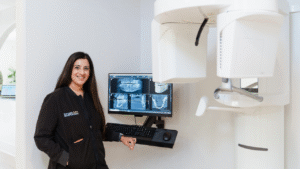
Digital X-rays help the dentist evaluate the tooth’s angle, root development, available space, and relationship to nearby teeth. CBCT imaging may be recommended when the tooth is deeply impacted, close to a nerve, or expected to require a more involved extraction.
After reviewing the findings, the dentist can explain whether the tooth can be monitored or whether removal is the more predictable option. Healthy wisdom teeth that are fully erupted and easy to clean may not require treatment.
If you’re experiencing recurring pressure, swelling, or pain behind your back teeth, visit our McKinney dental office or schedule a wisdom tooth evaluation. Our team can identify the source of the problem, review your options, and explain the next steps clearly.