Dental Implant Consultation in DFW: What the Dentist Checks First

A dental implant consultation helps you understand whether an implant is the right option for replacing a missing tooth. Before any treatment is recommended, your dentist needs to evaluate the health of your mouth, the strength of your jawbone, your bite, and what your long-term result should look like.
At brush365, the consultation is designed to be clear and practical. You should leave knowing what your options are, whether an implant makes sense for your situation, and what steps may be needed before treatment begins.
Your Oral Health Comes First
The first part of the visit focuses on your teeth, gums, and existing dental work. Healthy gums and stable surrounding teeth matter because dental implants need a strong foundation.
Your dentist will check for signs of gum inflammation, infection, decay, bite concerns, or damage near the missing tooth. These findings do not always prevent implant treatment, but they may need to be addressed before moving forward.
This step helps answer an important question: is your mouth ready for implant planning, or would another issue need care first?
Bone Support and 3D Imaging
Dental implants are placed into the jawbone, so bone health plays a major role in treatment planning. Your dentist needs to see whether there is enough bone height, width, and density to support the implant safely.
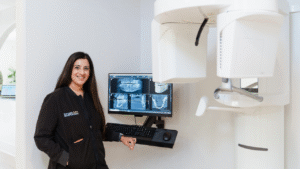
CBCT 3D imaging may be used to evaluate the area in greater detail. This helps your dentist see the jawbone, surrounding structures, and implant site more clearly than a visual exam alone.
During this part of the consultation, your dentist may evaluate:
- Whether there is enough bone to support an implant
- Whether bone loss has occurred after tooth loss
- How close the implant site is to nearby nerves or sinus areas
- Whether additional preparation may be needed before placement
Bone evaluation helps guide safe placement, accurate planning, and long-term implant stability.
Bite Alignment and Everyday Function
A dental implant has to work comfortably when you chew, speak, and move your jaw. That is why your dentist also checks how your upper and lower teeth come together.
If nearby teeth have shifted, or if the area receives too much pressure, the final implant crown may need more careful planning. Grinding, uneven wear, or bite imbalance can also affect how the implant functions over time.
By looking at the bite early, your dentist can create a treatment plan that supports comfort, appearance, and long-term function.
Treatment Options and Next Steps
After the exam and imaging are complete, your dentist will explain what they found in straightforward language. Some patients are ready to begin implant planning. Others may need gum treatment, tooth repair, bone grafting, or another step before the implant process starts.
You should also receive a clear overview of the expected timeline, what each phase involves, and what options are available based on your needs. The consultation gives you answers before you commit to treatment.
At brush365, dental implant treatment begins with careful planning, clear communication, and a comprehensive evaluation to support your long-term oral health.
If you’re looking for implant care in the DFW area, you can visit one of our brush365 locations or schedule your consultation.